

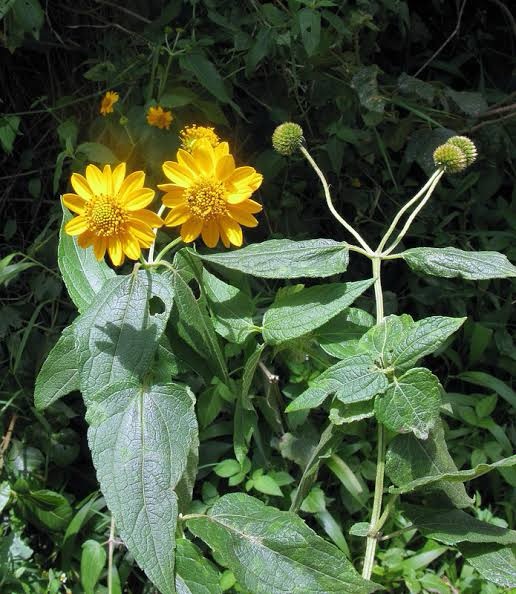
Melanthera scandens is a fast growing climbing herb or shrub found widely in tropical Africa, especially in Nigeria. It has hairy stems, rough, toothed leaves, and bright yellow, daisy-like flowers. The plant produces small, hairy fruits and commonly grows along roadsides, forest edges, and riverbanks, where it forms dense ground cover or climbs over other vegetation.
Melanthera scandens is widely used in traditional medicine for its diverse healing properties. The leaves are traditionally used to treat various ailments such as stomach ulcers and sores. In Nigeria, they are specifically used in managing conditions like dysmenorrhoea (painful menstruation), diabetes, and malaria. The plant also exhibits anti-inflammatory and analgesic effects, making it useful for treating swelling and body pains. Additionally, it possess anticonvulsant and anxiolytic properties, supporting its use in managing nervous system related conditions. These medicinal effects are attributed to the presence of bioactive compounds such as flavonoids, alkaloids, tannins, and saponins.
Melanthera scandens also has nutritional value in addition to its medicinal uses. In many African communities, the young leaves are cooked and eaten as a vegetable, often mixed with other leafy greens in soups and sauces. The leaves are rich in essential nutrients, including vitamins such as vitamin C, minerals like iron and calcium, and beneficial phytochemicals. These nutrients contribute to general health by supporting immune function, improving blood health, and offering antioxidant protection. Its use as both food and medicine makes it an important multipurpose plant in local diets and traditional healthcare.
 Dr. Seyibaba Marketplace
Leave a comment